AI Vehicle Inspection for Motor Insurance Claims

Better Evidence, Fewer Disputes, Stronger Trust
For Heads of Claims, vehicle inspection is not only a documentation step. It is one of the most important control points in the motor claims process.
Every assessment depends on the quality of the information behind it. Complete and reliable inspection records help claims teams assess damage, determine coverage, and clearly explain their decisions. When information is incomplete or inconsistent, however, claims take longer to process and decisions become harder to justify.
This matters in India, where claims experience remains a visible source of customer friction. According to the IRDAI Annual Report 2024–25, the Bima Bharosa portal received 257,790 grievances during FY2024–25. General and Health insurers accounted for 1,37,361 of those grievances, and the report states that 69% of grievances under General Insurance were related to claims. Although these figures are not limited to motor insurance, they demonstrate the broaderneed for more transparent and reliable claims handling. In practice, however, operational challenges make this difficult. Limited surveyor availability, inconsistent field practices, poor-quality images uploaded by customers, workshop disagreements, and repeated inspections can delay claim processing. Disputes over pre-existing or hidden damage may further increase the risk of claim leakage, inflated repair estimates, customer dissatisfaction, and avoidable operating costs.
Addressing these issues requires a more consistent and controlled inspection process. Claims teams need inspection information they can review with confidence, regardless of who conducts the inspection or how the evidence is submitted.
AI-driven vehicle inspection is becoming an important part of this shift. Beyond identifying visible damage, it can improve how vehicle information is captured, checked, organized, and reviewed. This gives insurers a more consistent basis for claim assessment while supporting stronger governance, fraud controls, and operational oversight.
The Real Challenge: Unreliable Inspection Evidence
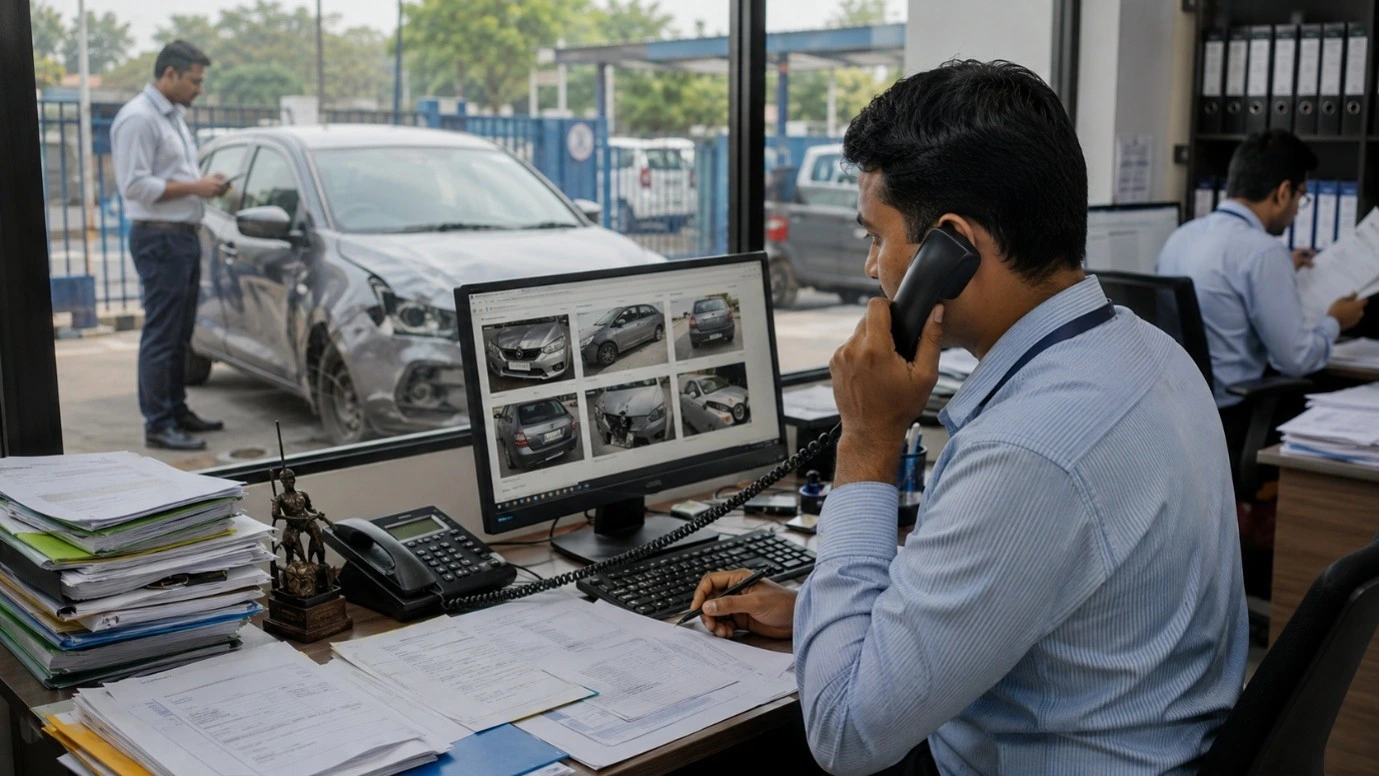
Vehicle inspection provides the foundation for motor claim decisions. However, the quality of an inspection can vary significantly depending on whether the inspection is conducted by a surveyor, an external partner, a workshop, or the customer. Vehicle images may be captured from incorrect angles, required views may be missed, or the submitted photographs may not provide sufficient detail for an accurate assessment. Damage descriptions may vary across surveyors, while supporting inspection details may be incomplete. These inconsistencies often lead to:
- Delayed assessments and repeated inspections
- Disagreements between insurers and repair workshops
- Disputes over new, hidden, or pre-existing damage
- Inconsistent decisions across claims teams, regions, and inspection partners
- Higher operating costs and longer turnaround times
- Increased exposure to claim leakage and fraudulent submissions
Many of these issues come from inconsistent inspection practices, unclear guidance, and missing or insufficient inspection information. The resulting ambiguity makes it harder to assess claims consistently, resolve disputes, and identify cases that require further investigation. For Heads of Claims, this is therefore a governance issue. The goal is to ensure that every inspection produces reliable information that can support fair, transparent, and defensible claim decisions.
How AI-Driven Vehicle Inspection Strengthens Claims Governance
AI-driven vehicle inspection improves the claims process by strengthening the evidence layer behind each decision. By standardizing key parts of the inspection process, it helps claims teams reduce unnecessary variation and focus their attention on cases that require closer judgment.
1. Guided Image Capture

A reliable assessment begins with the way vehicle images are captured.
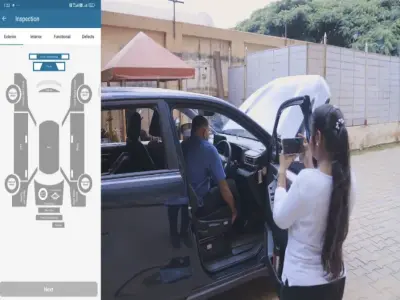
A digital vehicle inspection workflow can guide surveyors, inspection partners, or customers through each required view. Features such as stencil-based guidance, angle assistance, mandatory image sequencing, and missed-capture alerts ensure that every required vehicle image is captured correctly before completing an inspection.
This is particularly useful for remote vehicle inspection and customer self-inspection, where an experienced surveyor may not be physically present to direct the process.
2. AI-Assisted Vehicle Damage Detection
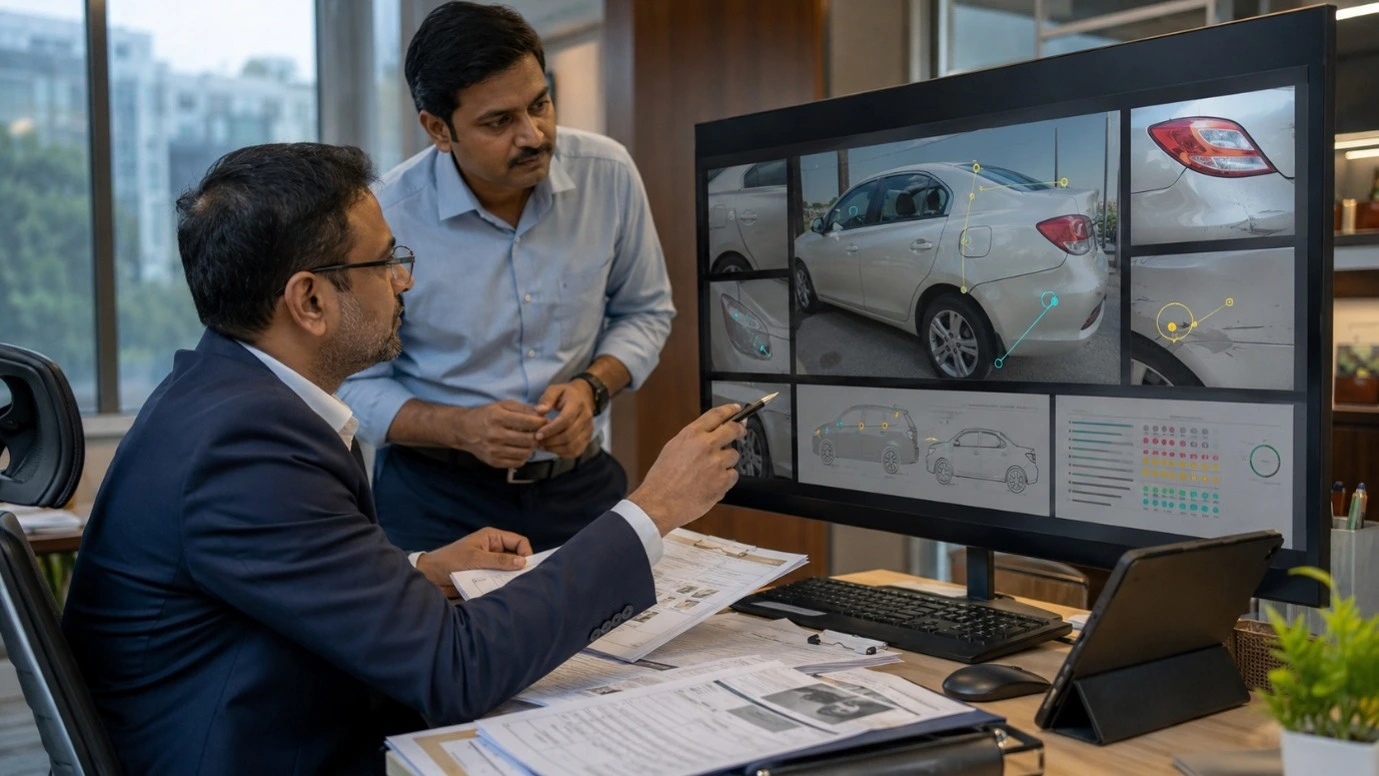
- AI-assisted vehicle damage detection can identify visible dents, scratches, and other vehicle damage from inspection images. It can then direct the assessor’s attention to areas that may require further review. Applying a consistent analytical approach across inspections can reduce variation between individual surveyors and support more uniform damage assessments. This is especially valuable when insurers manage high claim volumes across multiple teams, regions, or inspection partners.
3. Detecting Anomalies in Inspection Records
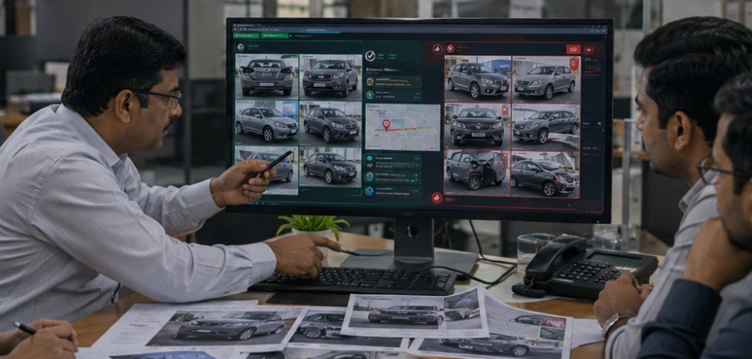
Damage identification alone is not enough. Claims teams must also be able to determine whether the submitted information is authentic, complete, and linked to the correct inspection event.
Modern insurance inspection technology can help identify potential anomalies, including:
- Recycled or previously submitted photographs
- The same damage being claimed more than once
- Images of the wrong vehicle
- Manipulated or inconsistent timestamps
- Duplicate inspection reports
- Patterns that may suggest a staged accident
- Mismatches between the vehicle and supporting documents
These signals do not automatically prove fraud, but they help claims teams identify cases that require additional review and prioritize investigation resources more effectively.
4. Decision-Ready Insights
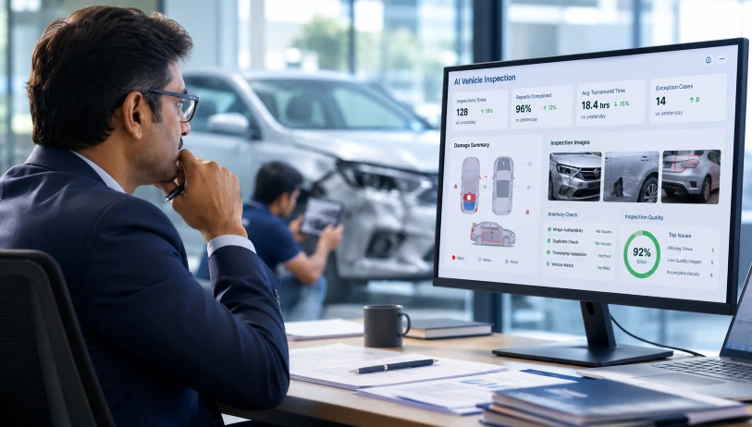
High-quality inspection data creates value only when claims teams can use it effectively.
Decision-ready reports bring together damage findings, inspection images, supporting records, and structured observations in a consistent format. This allows assessors to review vehicle condition more efficiently and compare cases using common criteria.
Automated report generation can reduce manual documentation, shorten report turnaround time, and limit avoidable follow-up. Built-in quality checks can also identify missing or incomplete information before the report reaches the claims team.
For claims leaders, visibility across the wider operation is equally important. Dashboards can provide information on:
- Inspection turnaround time
- Inspection completion rates
- Report quality
- Average inspection duration
- Pending and exception cases
- Surveyor or inspection partner performance
These insights help Heads of Claims identify bottlenecks, monitor service standards, and improve operational performance.
What Heads of Claims Should Look for in an AI-Driven Vehicle Inspection Solution
For Heads of Claims, the key question is whether an AI vehicle inspection solution can improve decision quality, operational control, and consistency across the claims process.
The right solution should help claims teams standardize inspections, identify cases that require further review, produce reliable reports, and maintain visibility into operational performance.
When evaluating a solution, ask whether it can:
- Standardize image capture and inspection workflows across surveyors, inspection partners, and customer self-inspections.
- Provide reliable inspection records that support fair and consistent claim decisions.
- Detect incomplete inspections, missing images, duplicate records, manipulated inspection data, or other anomalies that require further review.
- Create trusted audit trails for claim reviews, dispute resolution, regulatory compliance, and fraud prevention.
- Provide decision-ready reports and operational insights that improve claims governance and performance.
- Integrate seamlessly into existing claims workflows.
The goal is to establish a more controlled process that helps claims teams make faster, more consistent, and better-informed decisions.
Putting AI-Driven Vehicle Inspection into Practice
One example is Solwer Vehicle Digital Inspection, which helps insurers improve inspection quality while strengthening claims governance.Solwer combines AI-assisted vehicle damage detection with guided image capture, including stencil-based guidance, angle assistance, mandatory image sequencing, and missed capture alerts. These capabilities help improve image quality, reduce incomplete inspections, and create more consistent inspection records. To improve transparency and traceability, inspection reports include supporting information such as inspection photos, GPS location, and timestamps. Together, these elements create a clearer audit trail that supports claims reviews, dispute resolution, regulatory compliance, and fraud investigations.
Automated report generation transforms inspection data into structured, decision-ready reports, enabling claims assessors to review vehicle conditions more efficiently and consistently. Built-in quality checks improve report completeness before submission, while operational dashboards provide visibility into inspection turnaround time, inspection completion rates, report quality, inspection duration, and other key operational metrics. These insights help Heads of Claims identify operational bottlenecks, monitor service quality, and continuously improve claims operations.
Solwer also supports both expert-assisted inspections and customer self-inspections, allowing insurers to choose the most appropriate inspection approach for different claim scenarios. This flexibility enables insurers to balance customer convenience, operational efficiency, and inspection quality while maintaining consistent inspection standards across field inspections, remote inspections, and customer self-inspection journeys.
Conclusion
Better claim decisions start with better inspection information.
For motor insurers, AI-driven vehicle inspection is more than a technology upgrade. It provides a practical way to reduce process variation, improve operational control, and build greater confidence in the information used to assess claims. By improving how vehicle information is captured, validated, and presented, insurers can reduce unnecessary disputes, strengthen fraud controls, and create a more transparent and reliable claims process.
The real value of AI vehicle inspection lies in helping claims teams reach faster, fairer, and more confident decisions.
Explore more
Why Carbon Footprint Management is Becoming a Business Imperative
Manufacturers are at the forefront of the global effort to reduce carbon emissions. What was once a voluntary sustainability initiative has evolved into a non-negotiable business requirement. Today, managing carbon emissions is not optional—it is a strategic necessity that directly influences market access, brand equity, and long-term business resilience.

The Basics of Vehicle Digital Inspection: What It Is and How It Works
Discover how digital transformation is revolutionizing vehicle inspection processes, improving efficiency, accuracy, and compliance while reducing costs and environmental impact.